
Category: Highlight

  • Audi to launch last car with internal-combustion engine in 2026

    Audi CEO Markus Duesmann used Tuesday’s Climate Neutrality Foundation conference in Berlin to confirm the automaker’s plans to transition to a fully electric lineup.

    Duesmann said Audi will launch its final car equipped with an internal-combustion engine in 2026. Beyond this date, the automaker will only launch electric vehicles, he said.

    Audi expects to finally stop selling vehicles equipped with an internal-combustion engine (including hybrids) by 2033 though may push this date further out depending on market conditions. According to Duesmann, there may still be demand in some markets, particularly China, for vehicles with internal-combustion engines beyond 2033.
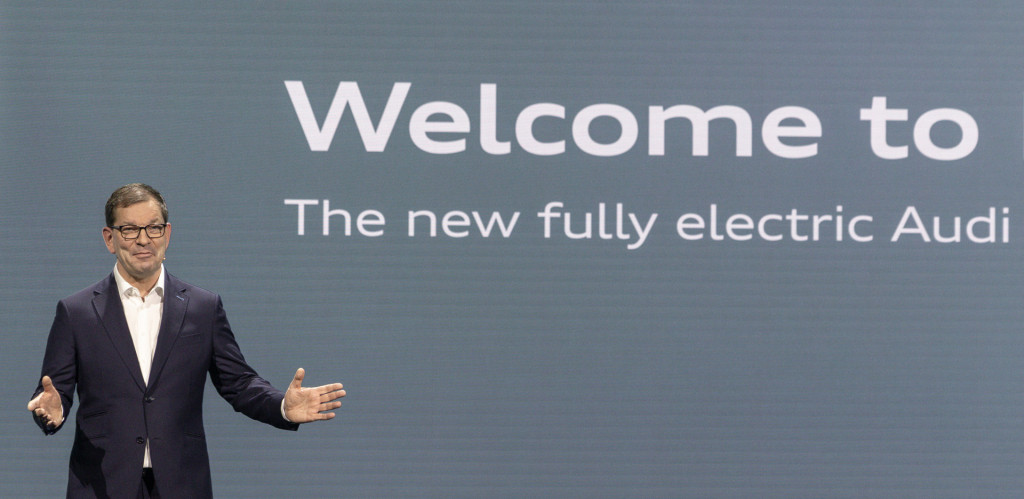
    Markus Duesmann

    Markus Duesmann

    By eventually moving to a fully electric lineup, Audi will dramatically reduce its carbon footprint. The automaker aims to achieve net-zero emissions by 2050, at the latest.

    Audi is joining a growing consortium of automakers committed to switching to electric lineups within a decade. Fellow Volkswagen Group brand Bentley as early as last November confirmed to make the switch by 2030. The most aggressive among established automakers is Jaguar which in February said it will be an electric-only brand by as early as 2025.

    By that 2025 date, Audi aims to have more than 20 electric vehicles in its lineup. Already on sale are the E-Tron, E-Tron Sportback, and E-Tron GT, and arriving soon are the Q4 E-Tron and Q4 Sportback E-Tron.
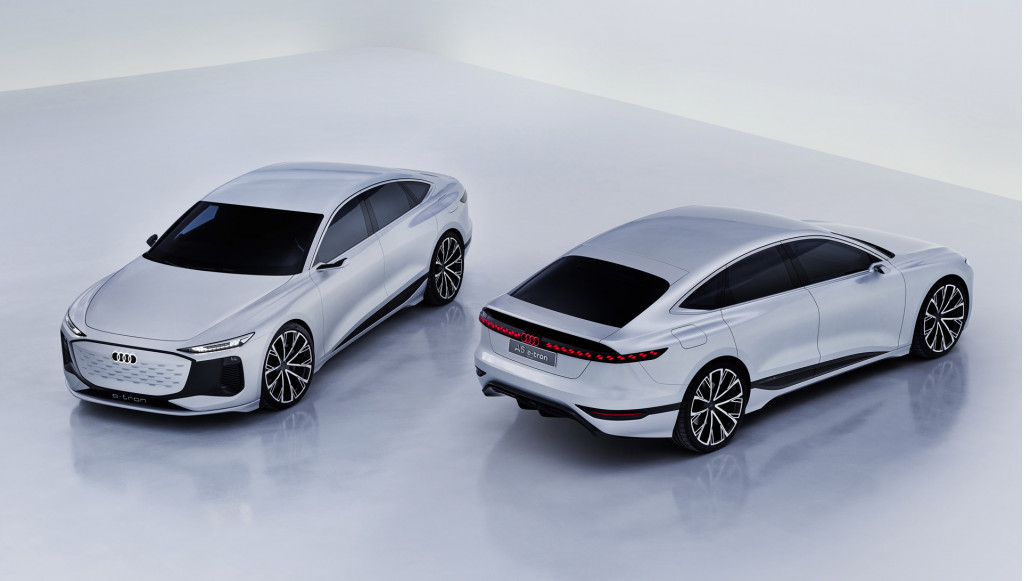
    Audi A6 E-Tron Concept - 2021 Shanghai auto show

    Audi A6 E-Tron Concept – 2021 Shanghai auto show

    And further down the pipeline is a Q6 E-Tron due in 2022 and an A6 E-Tron due in 2023, as well as a technological flagship that may go by the name Q9 E-Tron that’s due in 2025. The new A6 E-Tron which will be sold alongside the gas-powered A6 was previewed in April with a thinly veiled concept.

    There will likely also be an A4 E-Tron as part of the next-generation A4 family, though Audi is yet to confirm plans for one.

    To ensure adequate charging infrastructure, Audi is working with other companies to promote the expansion of renewable energy sources and public charging stations. Audi is also testing the waters with its own line of premium charging stations that can be booked in advance.
    Source

  • 2022 Mercedes-Benz GLE-Class spy shots

    The Mercedes-Benz GLE-Class is already going under the knife for a nip and a tuck.

    The GLE-Class was new for the 2020 model year and the 2022 model is getting a refresh. Early prototypes of the 2022 Mercedes-Benz GLE-Class were spotted testing on European public roads with nearly undisguised exteriors and heavily camouflaged interiors.

    The refreshed GLE-Class will be distinguished by a new front bumper design, seen clearly in these spy images, and updated headlights and taillights. The lighting details are covered by camouflage, but expect similar updates with eyebrow-like LED daytime running lights as seen in the refreshed 2021 E-Class lineup. Updated wheels riding on Pirelli P Zero tires can be seen on prototypes.

    2022 Mercedes-Benz GLE-Class spy shots - Photo credit: S. Baldauf/SB-Medien

    2022 Mercedes-Benz GLE-Class spy shots – Photo credit: S. Baldauf/SB-Medien

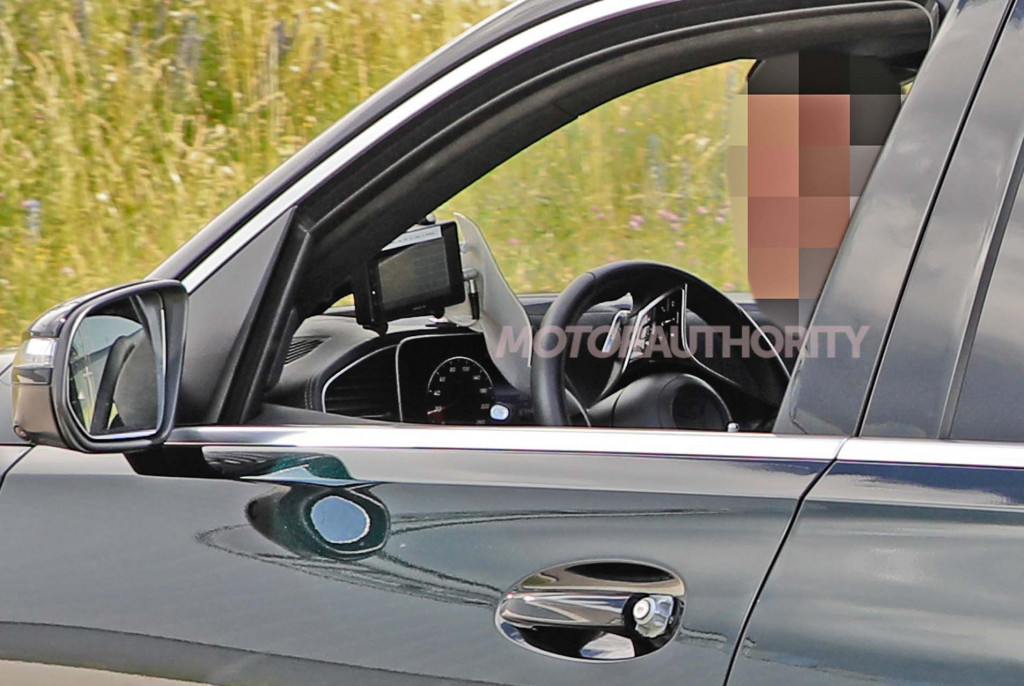
    Inside the heavily camouflaged prototypes we see a new steering wheel. Interestingly, it’s the new steering wheel design found in the 2021 S-Class rather than the twin-spoke steering wheel found in the latest E-Class. The overall dashboard design doesn’t appear to be changed. Expect the latest iteration of Benz’s MBUX infotainment system, though the dual 12.3-inch screens on the dashboard for the gauge cluster and infotainment are likely to carry over.

    Expect the powertrains to mostly carry over. The base engine should be powered by a 2.0-liter turbo-4. A turbocharged inline-6 and beefed up version of that engine with 48-volt mild-hybrid technology is also likely on the menu. A twin-turbo V-8 with an AMG badge will return. All engines will be mated to a 9-speed automatic transmission. Rear-wheel drive will be standard, while most models will feature all-wheel drive.

    A full suite of Mercedes’ latest driver-assistance systems will be available including the ability for the vehicle to steer itself in low-speed traffic.

    Source

  • Mazda’s next-generation vehicle platform to be used with gas, diesel, EVs, and front- and rear-wheel drive

    Mazda last week announced an ambitious electrification strategy, including a dedicated EV platform scheduled for introduction by 2025, as well as new hybrids and plug-in hybrids.

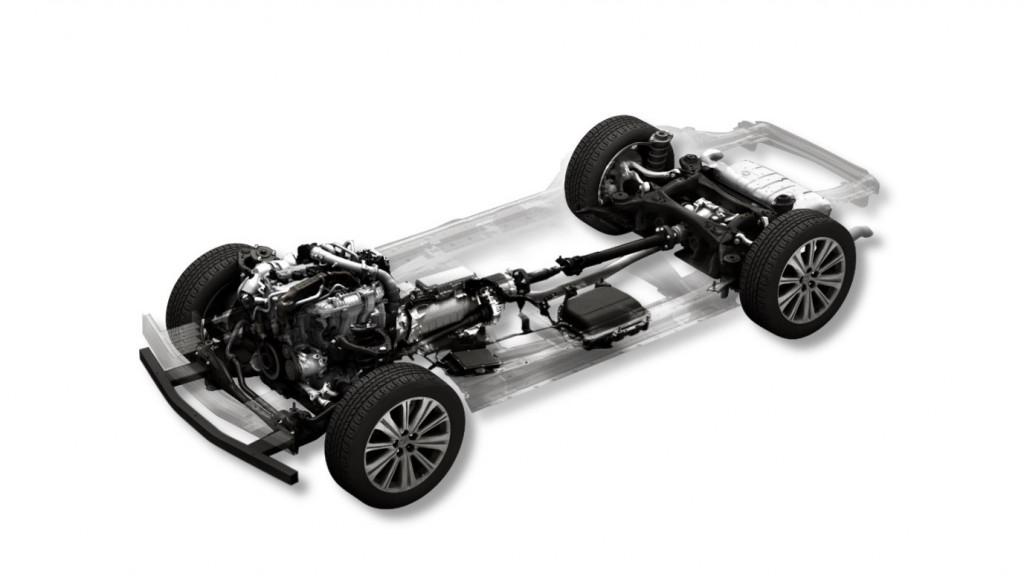
    A new Skyactiv Multi-Solution Scalable Architecture platform will underpin a host of new models launching between 2022 and 2025, including five hybrids, five plug-in hybrids, and three all-electric cars, a Mazda press release said. The company said the platform will accommodate transverse power units in small vehicles and longitudinal power units in larger vehicles. A transverse layout is usually associated with front-wheel-drive cars, and a longitudinal layout works most often with rear-wheel drive.

    Mazda also released the pictures shown here, which show its near-term powertrains, including a rotary engine range extender, large gasoline and diesel engines with a 48-volt mild-hybrid system, and a large gas engine plug-in hybrid. The rotary should be a transverse setup, while the large powertrains will be longitudinal.

    Due between 2025 and 2030 will be additional all-electric models based on the EV-specific Skyactiv Scalable EV Architecture, Mazda said.

    With this launch cadence, Mazda expects 100% of its lineup to save some degree of electrification by 2030, with EVs representing 25% of that total.

    Mazda gasoline mild-hybrid powertrain

    Mazda gasoline mild-hybrid powertrain

    Mazda said the new models will target major markets like the U.S., China, Europe, and Japan, but didn’t go into further detail.

    We do know the MX-30 crossover is scheduled to reach the U.S. later this year in all-electric form as a 2022 model, with a rotary range extender coming in calendar-year 2022 for the 2023 model year. It will use the CX-30’s platform. Mazda’s ongoing partnership with Toyota could lead to technology sharing as well.

    The Skyactiv Multi-Solution Scalable Architecture appears to be the much-discussed rear-wheel-drive platform set to underpin the next-generation Mazda 6. Mazda is expected to use inline-6 engines, with displacements ranging from 3.0 liters to 3.3 liters, in vehicles based on this platform, and they could include SUVs. The vehicles will also likely use the 48-volt mild-hybrid system. A report earlier this year said the new engines and platform will arrive in SUVs initially, before the redesigned Mazda 6 sedan.

    Past reports have also indicated Mazda may be working on a new sports car, possibly called RX-9, but if that happens, don’t expect it to be a Wankel-powered successor to the RX-7 and RX-8. Mazda has said its new rotary engines will be used as EV range extenders only.

    Source