
Category: Custom Cars

  • Keeping Your Daily Driven Project On The Road: UK Car Spares For Modded Motors

    Keeping Your Daily Driven Project On The Road: UK Car Spares For Modded Motors

    If you daily a project car, you already know the struggle. One minute you are loving life on a B-road blast, the next you are hunting UK car spares at 11pm because a 15-year-old sensor has cried enough. Keeping a modded daily on the road is all about knowing where to find the right parts, fast, without rinsing your entire build budget.

    Why UK car spares matter so much for modded dailies

    Running an older or tuned motor as your main transport is proper enthusiast behaviour, but it does mean you live and die by parts availability. New stuff breaks from hard use, old stuff breaks from age, and your mix of OEM, aftermarket and custom bits means the local motor factor does not always have your back.

    Getting clued up on where to source UK car spares – from breakers to specialist suppliers – can be the difference between a quick driveway fix and your car sitting on the drive for weeks while you scroll classifieds and cry into your torque wrench.

    OEM, pattern or performance: picking the right parts

    Not all parts are created equal, and you do not always need top-shelf gear for every job. Work out what matters and spend your cash there.

    • OEM parts: Ideal for sensors, gaskets, complicated electronics and anything that is a pain to change twice. They fit, they work, job done.
    • Pattern parts: Budget friendly and fine for simple stuff like drop links, bushes, non-critical brackets and some service items. Just avoid the absolute bargain-basement brands.
    • Performance parts: Where you actually want an upgrade – brakes, suspension, clutches, intercoolers and exhausts. Here, brand reputation really counts.

    For rare or older platforms, mixing all three is usually the only way to keep things moving. A decent supplier list for UK car spares means you can make that call part by part.

    Smart ways to source UK car spares for older and rare platforms

    Once your car is a bit left-field – JDM import, niche hot hatch or just old enough that the dealer shrugs – you need to get creative.

    • Breakers and scrapyards: Goldmine for trim, looms, brackets, interior bits and even engines and boxes if you are brave. Take tools, take a mate, and take photos before you pull anything.
    • Online breakers and parts finders: Many yards list stock online now, so you can search by part number or reg. This is where a specialist like NSUKSpares can be a lifesaver if you are into specific badges.
    • Owners clubs and forums: Old school, but the knowledge is unreal. Someone has already bodged the fix you are thinking about and will tell you what fits from what.
    • Social media groups: Marketplace and model-specific groups are full of people breaking cars. Ideal for grabbing big chunks like interiors, wings and glass.

    Planning ahead: build a parts stash, not a graveyard

    There is a fine line between being prepared and turning your garage into a scrapyard. The trick is to stash the right stuff, not everything you trip over.

    Good things to keep on the shelf:

    • Service kits – oil, filters, plugs, belts for your next change
    • Common failure items – coil packs, crank/cam sensors, ignition bits
    • Fast-wearing consumables – pads, a spare set of decent used tyres, bulbs and fuses
    • Unique trim or body parts that are known to be rare or discontinued

    Label everything, keep part numbers where you can, and note what car it came from. Future you will thank you when you are mid-job with oily hands.

    Checking quality when you cannot see the part first

    Buying UK car spares online is standard now, but you still need to be picky. Before you hit buy, check:

    • Part numbers – match them to your old part or a reliable catalogue
    • Photos – clear, real pictures beat stock images every time
    • Seller feedback – especially for used or reconditioned items
    • Returns policy – in case it turns up and clearly is not right

    For safety critical stuff like brakes and suspension, stick with brands and sellers you would be happy to trust at motorway speeds. Saving a tenner is not worth ending up in the barrier.

    Organised garage shelves stocked with UK car spares for performance cars
    Enthusiasts stripping a donor car in a scrapyard to source UK car spares

    UK car spares FAQs

    Are used UK car spares worth buying for a daily driver?

    Used UK car spares can be a solid shout for non-safety-critical parts like interior trim, brackets, looms, body panels and even engines or gearboxes if you know the seller. For brakes, suspension and steering, new quality parts are usually the safer bet. Always check mileage, condition, and any warranty offered before handing over cash.

    How do I find the right part number when buying UK car spares?

    The easiest way is to pull the old part and read the number stamped on it. Failing that, use your VIN with an online parts catalogue, dealer parts desk or a trusted specialist. Avoid guessing from photos alone, as small differences between versions can cause big fitment headaches.

    What UK car spares should I keep in the boot for emergencies?

    For most modded dailies, it is smart to carry spare fuses, a basic tool kit, a tyre repair kit or space saver, a few bulbs, some cable ties and tape, and if your car is known for it, a common failure item like a crank sensor or coil pack. That little stash can turn a roadside drama into a quick fix.

  • Why Old-School 4x4s Are The New Heroes Of Overlanding

    Why Old-School 4x4s Are The New Heroes Of Overlanding

    If you have spent any time on Insta or YouTube lately, you will have clocked the boom in old-school 4×4 overlanding builds. Boxy trucks, steel wheels, chunky tyres and more jerry cans than sense. While the new stuff is packed with tech, a lot of hardcore heads are going back to the roots for proper adventure rigs.

    Why old-school 4×4 overlanding rigs just work

    The big appeal is simple: reliability and fixability. Old 4x4s are usually body-on-frame, with chunky diffs and fewer electronics to throw a wobbly when you are miles from signal. If something does go pop, you can often bodge it with basic tools and whatever you have rattling round the boot.

    On top of that, parts support for the popular platforms is still strong. Whether you are in a Hilux, Patrol, Shogun or a classic Defender, there is normally a specialist somewhere hoarding bits. That makes it way less scary to take a 20 or 30 year old truck across Europe or into the Highlands.

    Best platforms for old-school 4×4 overlanding builds

    Everyone has their favourite, but a few platforms keep popping up in the scene:

    • Japanese ladder-frame 4x4s like Hilux Surf, 4Runner, Patrol and Pajero
    • Old Land Rover Defenders and Discoverys for the full Brit farm-spec vibe
    • Early Land Cruisers and Prados for that unstoppable, go-forever rep

    Pick something with a strong chassis, low-range transfer box and a decent aftermarket. You want to be able to choose from different suspension setups, bumpers and roof racks rather than fabricating everything from scratch.

    Core mods for a usable overland truck

    With old-school 4×4 overlanding, it is easy to get carried away bolting tat on. Sort the basics first:

    • Suspension and tyres – A sensible 2 inch lift with quality shocks and springs, plus all-terrain or mud-terrain tyres in a common size. No need for monster truck stance.
    • Protection – Decent skid plates, rock sliders and a proper recovery point front and rear. They save you a fortune the first time you misjudge a rut.
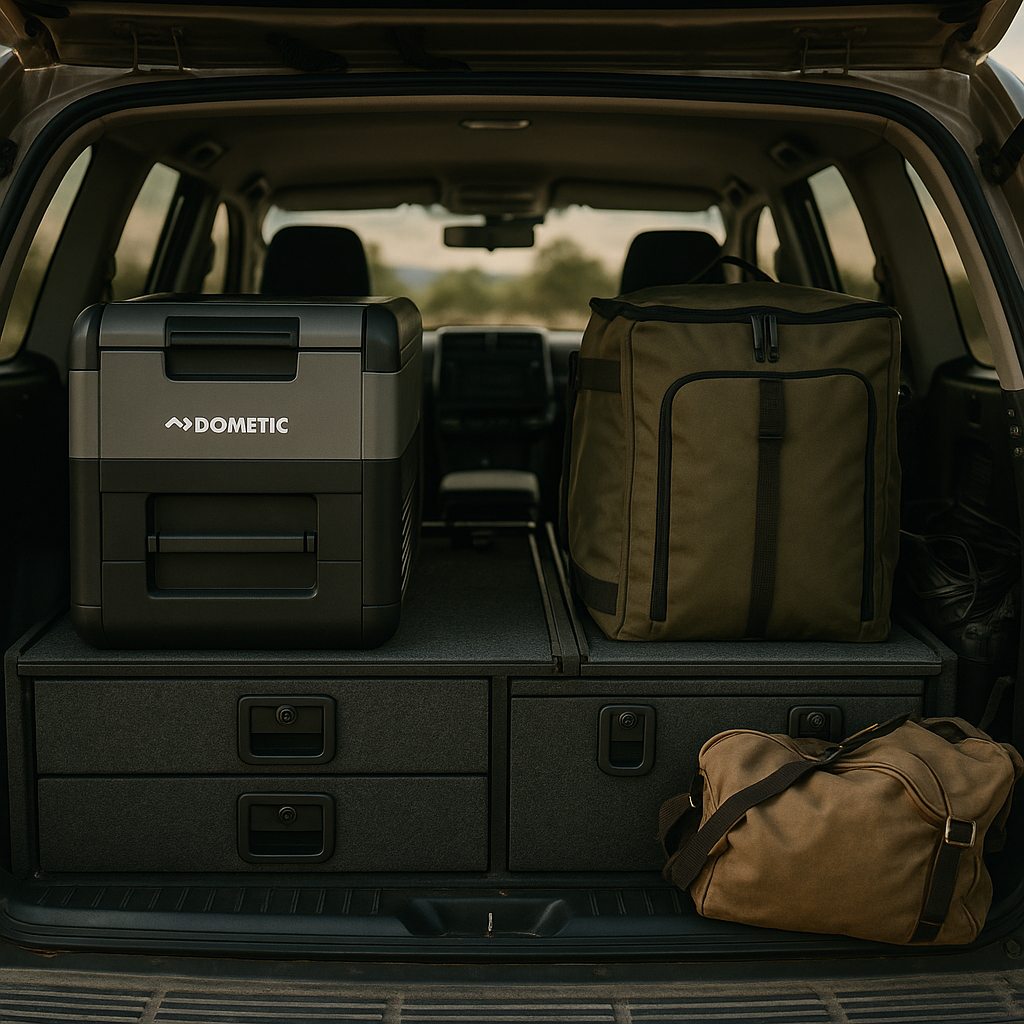
    • Electrics – Dual battery setup, tidy wiring and enough power for a fridge, lights and chargers. Messy looms cause more headaches than anything.
    • Storage – Drawers or boxes so kit is not flying around the cabin, and tie-down points in the back.

    Only once that lot is dialled in should you start thinking about snorkels, fancy roof tents and Instagram fairy lights.

    Keeping old rigs running on long trips

    The flip side of old-school 4×4 overlanding is that age catches up with everything. Before any big trip, you want to baseline the truck: fluids, belts, hoses, wheel bearings, brakes, bushes and cooling system. Replace anything that looks tired, not just what is actually broken.

    It is also smart to carry a spares pack tailored to your platform: filters, belts, a couple of hoses, fuses, bulbs, a hub bearing and some basic hardware. Owners of tough old Toyotas often throw in a few key bits alongside their Toyota Land Cruiser parts order so they have everything ready before heading off-grid.

    Travel comfort vs hardcore capability

    A lot of people daily their overland builds, so you need to balance comfort and capability. Too much lift, too aggressive a tyre and solid engine mounts will make motorway miles grim. Think about sound deadening, decent seats and a reasonable cruising gear ratio, especially if you are hauling a roof tent and a full load of gear.

    There is also a weight game to play. Every steel bumper, winch and drawer system adds kilos. An overloaded truck handles like a shopping trolley and munches through suspension components. Weigh the rig, be honest about what you actually use, and ditch the dead weight.

    Finding inspiration and local specialists

    The UK overland and 4×4 scene is stacked with inspiration. You will see everything from ultra-clean JDM imports to battle-scarred farm trucks built to roam. Local outfits like 4×4 specialists in Yorkshire, or scene-friendly garages in the Midlands, can be a goldmine for set-up advice and fabrication work if you are not a welder yourself.

    Convoy of trucks built for old-school 4x4 overlanding on a remote trail
    Organised storage setup inside an old-school 4x4 overlanding build

    Old-school 4×4 overlanding FAQs

    Is an old-school 4×4 reliable enough for long overland trips?

    A well maintained old-school 4×4 can be very reliable for overlanding. The key is to baseline the vehicle before you go: refresh fluids, belts, hoses, cooling system, brakes and suspension, and fix any rust or bodged wiring. Carry a sensible spares kit and basic tools, keep weights under control, and drive within the truck’s limits. Most breakdowns on trips come from neglected maintenance rather than age alone.

    How much lift do I need for old-school 4×4 overlanding?

    For most overlanding, a modest lift of around 2 inches with quality springs and dampers is plenty. It improves clearance and approach angles without wrecking road manners or stressing driveline angles. Combine that with slightly larger all-terrain tyres and some underbody protection and you will be able to tackle rough tracks comfortably without turning the truck into a handful on the motorway.

    Do I need a roof tent for an overland build?

    You do not have to run a roof tent for a capable overland setup. They are convenient and look the part, but they add weight high up and can hurt fuel economy. Plenty of people run ground tents, swags or simple sleeping platforms in the back of the truck. It is better to get the mechanicals, storage and electrics sorted first, then decide how you actually like to camp after a few trips.

  • Clean air zones and modified cars: what UK car nerds need to know

    Clean air zones and modified cars: what UK car nerds need to know

    If you daily something spicy, you have probably already bumped into clean air zones and modified cars becoming a bit of a headache. The UK is rolling out more low emission and clean air schemes, and they are not exactly mapped-diesel or decat friendly.

    What are clean air zones and modified cars rules, in plain English?

    Forget the council jargon. A clean air or low emission zone is basically a ring around a city where they check your reg and either let you in free or slap you with a daily charge or fine. They are not looking for how loud your exhaust is – they only care what your car was certified as when it left the factory.

    In most English cities with clean air zones, private cars are either not charged at all, or only charged if they are older and high emitting. London is the strictest with its Ultra Low Emission Zone, charging most pre-Euro 4 petrols and pre-Euro 6 diesels. Scotland has its own Low Emission Zones that flat out ban non compliant cars in certain city centres.

    The key bit for us is that the system uses the car’s official Euro emissions rating and fuel type, not what mods you have done since.

    How ANPR cameras actually check your car

    Those gantries and lamppost cameras are ANPR – Automatic Number Plate Recognition. When you drive past, they read your plate and ping it against the DVLA database. That tells them:

    • Vehicle type and body style
    • Fuel type – petrol, diesel, hybrid, electric
    • Date of first registration
    • Whether it meets a certain Euro standard (or what default band it falls into)

    They are not sniffing your tailpipe, they are not checking if your cat is still there, and they are not scanning for a front mount or a fat backbox. If the database says your car is compliant, you are sweet, even if it is running a big turbo and a straight pipe. If the database says it is not compliant, you are paying or risking fines, even if it is the cleanest, best mapped thing in the postcode.

    Mapped diesels, decats and older petrols: what actually happens?

    This is where clean air zones and modified cars get awkward. A few common builds and how they are treated:

    Mapped Euro 6 diesel daily

    If your diesel is new enough to be officially Euro 6, the system treats it as compliant in most schemes. Stage 1 map, DPF still in place, you are usually fine from a zone point of view. The risk is more MOT related if you push smoke levels or mess with emissions kit.

    Decatted or DPF deleted car

    The cameras cannot see your missing cat or DPF. They only see the reg. So you will still be classed as compliant or not based on factory spec. The problem is that decats and DPF deletes are illegal for road use, and if you get pulled or MOT tested properly, you are in trouble regardless of the clean air zone.

    Older petrols and proper retro stuff

    Pre-Euro 4 petrols are the ones that get hammered in the strictest zones. That means a lot of late 90s and early 2000s stuff is on the naughty list. Some cities do not charge private cars at all yet, but London and the Scottish LEZ setups are already making life hard for anyone dailying older metal.

    What counts as compliant for most zones?

    Every scheme has its own fine print, but a rough guide for private cars looks like:

    • Petrol: usually OK if Euro 4 or newer (around mid 2000s on, but check your exact car)
    • Diesel: usually needs to be Euro 6 to be fully compliant
    • Hybrids: treated as petrol or diesel based on the engine type
    • Electric: normally free in all current schemes

    Again, it is all about the official rating, not your mods. A stock looking Euro 3 petrol is treated worse than a 500 bhp Euro 4 sleeper that still has its original emissions hardware.

    Realistic options for UK car nerds

    If clean air zones and modified cars are starting to cramp your style, you have a few routes:

    Car meet showing enthusiasts discussing clean air zones and modified cars near a UK city
    View from inside a tuned daily driving towards a sign about clean air zones and modified cars

    Clean air zones and modified cars FAQs

    Do clean air zones check if my car is decatted or DPF deleted?

    Clean air zones use ANPR cameras that read your number plate and check it against the DVLA database. They do not physically inspect your exhaust or DPF, so they will not spot a decat or DPF delete directly. However, decats and DPF deletes are illegal for road use, and you can still fail an MOT or get done if the car is inspected by the police or DVSA, regardless of whether it passes through a zone without issues.

    Will remapping my diesel help with clean air zone charges?

    Remapping your diesel does not change how clean air zones see the car, because the cameras only care about its original certification, not its current emissions. If the car is officially Euro 6 it will usually be treated as compliant whether it is mapped or not. If it is an older Euro 5 or earlier diesel, a map will not make it count as compliant and you may still face charges in stricter zones.

    What is the best type of daily for clean air zones and modified cars?

    For most UK cities, a Euro 4 or newer petrol, or a Euro 6 diesel, is the safest bet if you want to avoid charges. From a tuning point of view, smaller turbo petrols are a sweet spot, as they are usually compliant, respond well to basic mods, and avoid some of the hassle that comes with modern diesels. That way you can still enjoy clean air zones and modified cars without getting hammered by daily fees.