

If you are into big torque rigs, importing or running American pickups over here, you will quickly find that understanding diesel engine parts for US trucks is the difference between a smoky shed and a properly sorted street bruiser.

Why US diesel trucks hit different
Stateside oil-burners are a different vibe to the usual Euro TDI stuff. Big capacity, low revs, and absolutely silly torque when you get them breathing right. The flip side is that a lot of the diesel engine parts for US trucks are built with towing and long-haul in mind rather than hard launches on a cold, wet dual carriageway.
That means when you start leaning on them with more boost and fuel, you need to know which bits are weak, which are overbuilt, and what is actually worth upgrading rather than just throwing shiny catalogue parts at it.
Core diesel engine parts for US trucks to understand
Most of the usual suspects are the same as any diesel, just scaled up. The key bits to get your head round are:
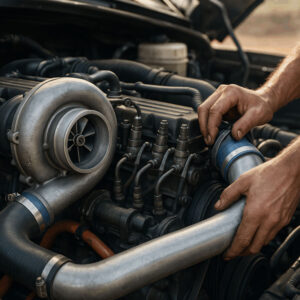
- Turbocharger and manifold – Stock VGT turbos are great for towing and spool, but once you start pushing them they overspeed and cook bearings. A decent fixed-geometry or compound setup is the go-to for big power builds.
- Injectors and high-pressure pump – On common-rail stuff these are the heart of the tune. Bigger nozzles and a higher flowing pump will let you make power without running silly rail pressures that nuke seals.
- Intercooler and pipework – The OEM coolers are usually sized for stock boost. Turn it up and intake temps skyrocket. A bigger front mount and hard pipes keep charge temps and EGTs under control.
- Head studs and gaskets – Once boost creeps up, factory head bolts start to complain. Stud and gasket upgrades are cheap insurance compared with lifting a head under load.
- Bottom end – Cranks are generally stout, but rods and pistons are where things get sketchy. Know the safe torque window for your specific engine code before chasing dyno clout.
Common upgrade paths for US diesel trucks in the UK
If you are building something usable on UK roads rather than a SEMA show pony, the sweet spot is a responsive, mid-range focused setup. A typical path looks like:
- Intake, exhaust and intercooler upgrades to free up flow and drop EGTs
- Head studs and fresh gaskets before you crank the boost
- Mild turbo upgrade or a properly specced single that keeps spool sensible
- Slightly larger injectors matched to a custom map
- Transmission cooler and, if auto, a stronger torque converter
Built right, you end up with a truck that will happily daily, haul trailers, and still embarrass a lot of fast road cars from a roll.
Sourcing diesel engine parts for US trucks in the UK
The hardest bit is usually getting the right parts over here without being rinsed on shipping and import duty. A few tips:
- Know your exact engine code – US trucks often have mid-year changes. Build date and engine code matter more than the badge on the wing.
- Cross-reference part numbers – Before ordering from overseas, see if there is a Euro equivalent or shared platform part that is easier to get locally.
- Use specialist importers – A good importer will batch ship and handle customs so you are not playing roulette with courier fees and delays.
- Lean on the community – Forums, Facebook groups and UK owners who have already done similar builds can save you a fortune in trial and error.
When you are hunting for local garages or tuners that are comfortable working on imports, directories like maxxdirectory.co.uk are handy for finding people who actually get the scene.
Keeping big diesel builds reliable on UK roads
Running serious torque through a heavy truck on our tight, bumpy roads is brutal on parts. Once you have upgraded the core diesel engine parts for US trucks, think about the supporting mods:

Diesel engine parts for US trucks FAQs
Are diesel engine parts for US trucks compatible with UK fuel?
Most modern US diesel trucks run fine on UK pump diesel, but tuning and injector choice should take our fuel quality and cetane rating into account. Avoid cheap, low-quality fuel, keep on top of filter changes, and if you are chasing big power, speak to a mapper who understands both the engine platform and UK fuel. That way you stay reliable while still making strong torque.
What should I upgrade first on a US diesel truck imported to the UK?
Start with health checks and maintenance items, then look at intake, exhaust and intercooler upgrades to drop EGTs. After that, head studs and a sensible turbo and injector combo matched to a custom map are the usual first steps. This approach keeps the engine safe while giving a noticeable bump in power and drivability on UK roads.
Is it hard to get diesel engine parts for US trucks delivered to the UK?
It is not difficult, but it can be expensive and slow if you do it blindly. Use trusted importers, batch orders where possible, and always confirm part numbers and engine codes before you buy. Many wear items and fluids can be sourced locally, so save the overseas shipping for the specialist bits like turbos, injectors and tuning hardware.