
Author: Alex

  • Beginner’s Guide To UK Track Days In Your Own Car

    Beginner’s Guide To UK Track Days In Your Own Car

    Thinking about jumping into UK track days in your own car but not sure where to start? Good. You are exactly the sort of nerd we like. Here is a deep but beginner-friendly rundown so you do not look clueless in the paddock or bin your pride and joy on the sighting laps.

    What actually happens on UK track days?

    Most UK track days are non-competitive, open pit lane or sessioned events. You rock up, get noise tested, sign on, do a briefing, then head out for sighting laps before they let you loose properly. Overtaking is usually by consent and on specific sides only, there are no lap times, and it is all about clean, consistent driving rather than heroics.

    There will be marshals at every post, a pit lane speed limit, and a paddock full of everything from bone-stock daily drivers to full-cage time-attack weapons. Respect the rules and you will get loads of seat time and a seriously addictive buzz.

    Noise limits on UK track days

    Noise is the first thing that catches people out. Circuits are under heavy pressure from locals, so they take it seriously. You will usually see two numbers: a static limit and a drive-by limit.

    • Static test – done in the paddock, typically 0.5 m from the tailpipe at 45 degrees, around 3/4 of max revs. Common limits are 98 dB, 100 dB or 105 dB.
    • Drive-by – measured at trackside as you go past at speed. You might pass static and still get black flagged for going over the drive-by.

    If you are rocking a straight-piped turbo car or a screamer of a Honda, consider bung inserts, extra silencers or a bolt-on track backbox. Turn down the crackle map too – nobody is impressed and it just trips the meters.

    Helmet rules and safety basics

    Every circuit will require a proper helmet. Most will accept a good-condition motorcycle lid, but check the organiser’s rules before you book. No open-face scooter toys, no battered relics from the shed. If you are borrowing a lid, make sure it fits snugly and the visor is clear and unscratched.

    Long sleeves and long trousers are usually mandatory, plus closed shoes. Harnesses and buckets are nice but not essential for your first day – a standard three-point belt in good condition is fine. If you run a half cage or bolt-in bar, make sure your head cannot meet the metal in a crash. Padding is cheap, brain cells are not.

    Track day insurance and why it matters

    Your normal road policy almost certainly does not cover circuit use. Some insurers will add specific cover for UK track days, others will flatly refuse. There are also specialist one-day policies you can buy just for the event.

    Track cover is not mandatory, but if you are still paying finance or would cry for a week if you stuffed the car, it is worth pricing up. Read the excess, check whether it covers armco damage, and keep in mind it is there to save you from total disaster, not from every little scrape.

    Flags and black flag etiquette

    Learn your flags before you go. The big ones:

    • Yellow – incident ahead, no overtaking, be ready to slow right down.
    • Red – session stopped, come off the throttle and return to the pits safely.
    • Blue – quicker car behind, let them past at the next safe point.
    • Black – you are in trouble. Come into the pits next lap and see the marshals.

    Black flags are usually for noise, driving standards, fluid leaks or something visibly wrong with the car. Do not ignore it, do not argue. Sort the issue, have a chat, and you will usually get back out.

    Best beginner-friendly circuits for UK track days

    If you are new, pick circuits with plenty of run-off and fewer concrete walls. Bedford Autodrome, Blyton Park and Snetterton are all popular starter tracks with loads of space to make mistakes. Smaller, tighter circuits like Cadwell or Lydden are awesome fun but less forgiving when you overcook it.

    Cars exiting a bend on a circuit during UK track days with marshal post in view
    Driver checking their car in the pit lane while preparing for UK track days

    UK track days FAQs

  • How ULEZ And Clean Air Zones Affect Older Performance Cars

    How ULEZ And Clean Air Zones Affect Older Performance Cars

    If you daily an older hot hatch, boosted barge or 90s hero, you have probably already had beef with ULEZ and clean air zones. These schemes are spreading across the UK and they hit older performance cars and daily-driven projects hard, especially if you are using something spicy for the commute.

    What are ULEZ and clean air zones actually checking?

    Forget internet myths – ULEZ and clean air zones are not checking your decat, your remap or how loud your exhaust is. They only care about what your logbook says and the emissions standard your car was built to meet.

    In most UK schemes, the key rules are:

    • Petrol cars generally need to be Euro 4 or newer
    • Diesels usually need to be Euro 6 or newer
    • Historic vehicles over 40 years old are often exempt, but check each zone

    That means loads of 90s and early 2000s performance stuff gets slapped with a daily charge if you drive into a zone – even if it is mint and well maintained. The system just looks at your plate, checks the database, and either lets you roll or sends you a bill.

    How to check if your car is compliant

    Before panicking and listing your pride and joy, check where you actually stand. Most city schemes have an online checker where you punch in your reg and it tells you if you are in the clear or not. For imports or engine-swapped builds, it can get a bit murky, so be ready with paperwork.

    Useful things to have to hand:

    • V5C logbook details, including fuel type and date of first registration
    • Any manufacturer proof of Euro standard for oddball models or imports
    • Evidence of a fuel type change if the car has been converted

    If the checker says you are non-compliant but you know the car should meet the standard, you can usually appeal, but expect a slog. For most of us running older performance stuff, the answer will be simple: pay up or avoid the zone.

    Realistic options if your car fails ULEZ and clean air zones

    Once you know your status, you have a few paths. None are perfect, but some hurt less than others.

    1. Keep it and dodge the zones

    If you do not actually need to drive into city centres, you are basically fine. Use a boring compliant daily for town stuff and keep the fun car for evenings, B-road blasts and meets. It is annoying, but it keeps the keys in your pocket.

    2. Suck up the charges

    If you live inside a zone, the maths gets savage. Daily charges stack up fast, especially if you commute. Work out what you are really spending each month. For some people, paying the charge a couple of times a week for meets or parts runs is still cheaper than changing cars.

    3. Move the car, not your life

    Some owners rent a garage or space outside the zone and keep the toy there. It is a faff, but it means you are not bleeding money just to move your project around. It also keeps temptation low to use it for boring errands.

    4. Convert or modify to comply

    There are a few niche options like LPG conversions or full EV swaps that can change how the car is classified, but they are not cheap and you need to be sure the paperwork will actually change your status. For most builds, this is more about passion than saving money.

    Should you sell your non-compliant performance car?

    This is the big question doing the rounds in every group chat. Do you bail out now, or double down and keep the thing you love even if ULEZ and clean air zones keep creeping outward?

    Things to weigh up:

    Driver in a modified project car checking ULEZ and clean air zones status on a phone
    Car meet of older performance cars avoiding city ULEZ and clean air zones

    ULEZ and clean air zones FAQs

    Do mods like decats or remaps affect ULEZ and clean air zones charges?

    No. The charges for ULEZ and clean air zones are based on the emissions standard recorded for your car, not on what modifications you have done. A decat or remap could cause you problems at MOT time or with roadside checks, but the clean air zone cameras just read your number plate and look up the registered Euro standard. If the car is listed as compliant, you will not be charged, even if it is heavily modified.

    Are imported performance cars treated differently by ULEZ and clean air zones?

    Imported cars can be trickier because the emissions data is not always clear in UK records. For ULEZ and clean air zones, the system still checks your registration against the database. If your import should meet a certain Euro standard but is not recorded correctly, you may need to provide manufacturer evidence or official paperwork to get the record updated. Until that is sorted, the system will usually assume the worst and charge you.

    Will more UK cities bring in ULEZ and clean air zones for older cars?

    It is very likely that more towns and cities will look at ULEZ and clean air zones or similar schemes over the next few years, especially in busy urban areas with high pollution. Each local authority sets its own rules, charges and exemptions, so the details will vary. If you run an older performance car, it is worth keeping an eye on local council plans and consultations so you are not caught out when a new zone goes live.

  • MOT Rules For Modified Cars: Exhausts, Coilovers, Wheels & LEDs

    MOT Rules For Modified Cars: Exhausts, Coilovers, Wheels & LEDs

    If you daily a slammed or tuned motor, keeping on top of MOT rules for modified cars is the difference between a clean pass and a tester shaking their head while you ring round for a trailer.

    What MOT rules for modified cars actually care about

    Contrary to the pub chat, the MOT is not there to kill the scene. Testers do not care how wild your build is, they care about safety, noise and emissions. The key points for most modified cars are:

    • Exhaust noise and leaks
    • Cats, DPFs and emissions
    • Ride height and coilover setup
    • Aftermarket wheels and tyre fitment
    • Lighting and LED conversions

    As long as the car is safe, not obviously illegal and not taking the mick with noise or smoke, a switched on tester will usually be fine.

    Exhaust noise, decats and emissions

    Exhausts are where a lot of people get caught out. A performance system is fine as long as:

    • It is not leaking
    • It is secure with proper hangers
    • It is not "excessively loud" compared to a standard car

    "Excessively loud" is subjective, but if your car is antisocial at light throttle or needs ear defenders in the cabin, expect questions. Pop and bang maps that fire on command can also wind testers up, so stick it in the quietest mode you have.

    On emissions, the big one is missing cats and DPFs. If the car left the factory with a cat or DPF, it must still be there and look genuine. A straight pipe in a fake cat shell is asking for a fail. Petrols have to hit the gas test numbers and diesels are checked for visible smoke and DPF presence.

    If you are running a decat for track use, the safest play is to keep a catted section ready to bolt back in for MOT time. Sort any boost leaks and misfires before the test too, as both can ruin your emissions numbers.

    Coilovers, ride height and clearance

    Coilovers themselves are not a problem. MOT rules for modified cars only really care about how they are fitted and how the car behaves. You need to tick these boxes:

    • Springs seated properly at full droop – no loose springs
    • No fouling on tyres, bodywork or brake lines at full lock
    • Dampers not leaking and securely mounted
    • Enough ground clearance that nothing critical is scraping

    If your daily is sat on the floor, wind it up a touch for the test. Give yourself enough room so the exhaust, fuel lines, sump and chassis rails are not polishing the MOT station floor. A quick four-corner tweak and tracking check before the test can also sort out any weird handling that might worry a tester on the brake rollers.

    Aftermarket wheels, stretch and poke

    Aftermarket wheels are fine as long as the basics are right. The tester is looking for:

    • No tyre contact with arches, liners or suspension
    • Correct load and speed rating on the tyres
    • No cracks, chunks missing or exposed cords
    • Wheel nuts or bolts long enough and properly seated

    A bit of stretch and poke is not an automatic fail, but if the bead looks sketchy or the tread sits outside the arch throwing crud everywhere, you are relying on tester mood. For cars on aggressive fitment, it is worth having a "MOT set" of wheels and tyres you can swap on for the day.

    LED conversions, light bars and MOT

    Lighting is an area where testers have got a lot stricter. Factory LED or xenon setups are fine, but cheap LED bulbs thrown in halogen housings are a grey area. Testers are checking for:

    • Correct colour and aim – no blinding oncoming traffic
    • Working dip, main, indicators and brake lights
    • No flicker, loose units or insecure wiring

    Many will fail obvious plug-in LED headlight bulbs that scatter light everywhere. If you want hassle free MOTs, keep proper halogen bulbs in for the test or invest in a full, type-approved headlamp upgrade rather than eBay specials.
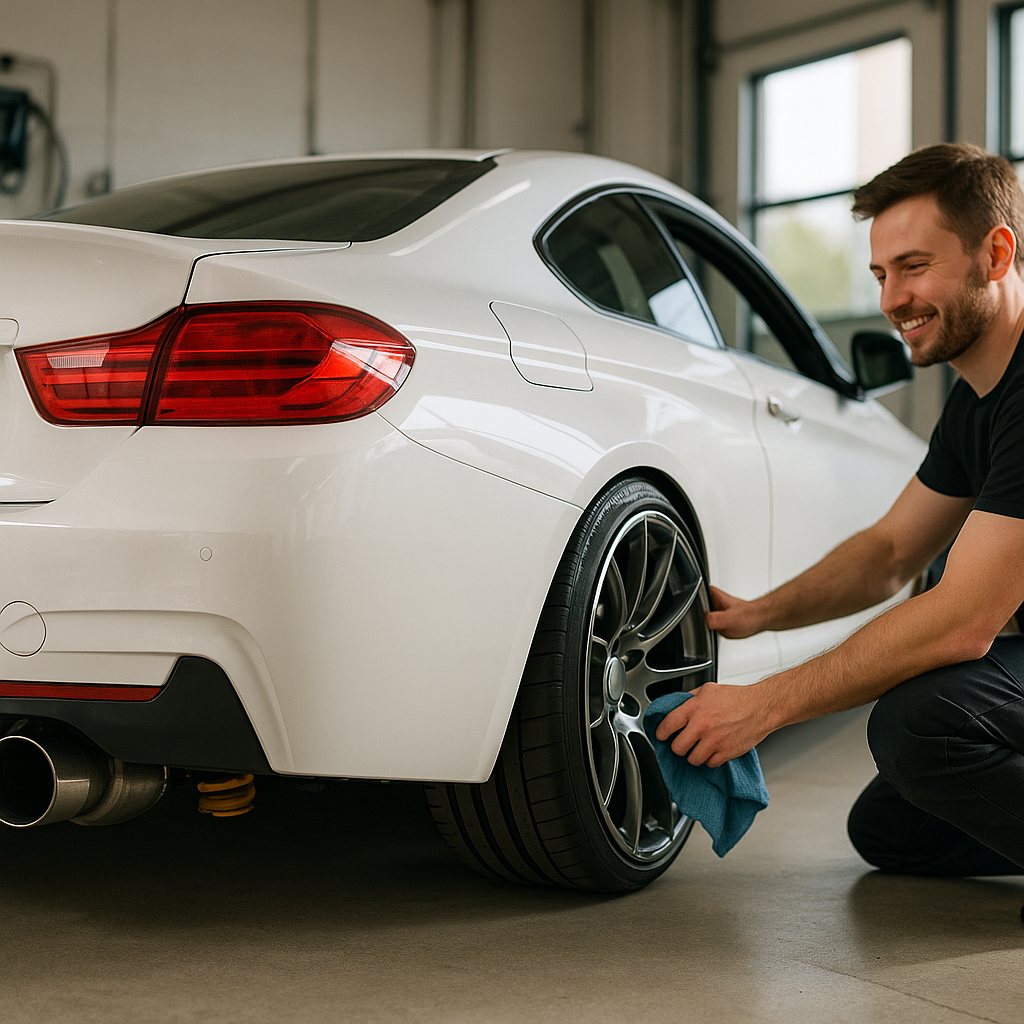
    Owner preparing a slammed performance car with aftermarket parts to meet MOT rules for modified cars
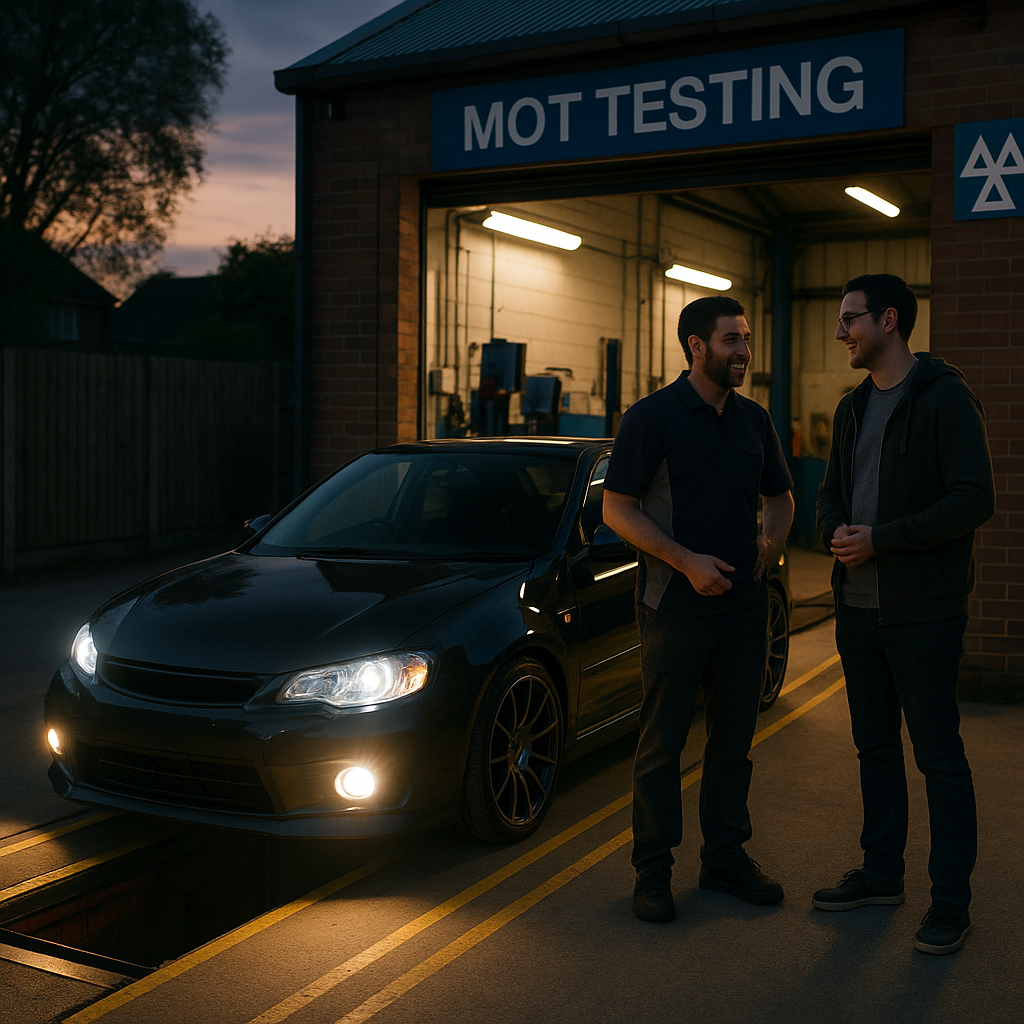
    Modified car with LED lights and custom wheels at a UK test centre discussing MOT rules for modified cars

    MOT rules for modified cars FAQs

    Will coilovers fail the MOT on a daily driven car?

    Coilovers will not fail the MOT just for being fitted. They only cause problems if the springs are loose at full droop, the dampers are leaking, or the car is so low that tyres, exhaust or chassis are fouling. Set a sensible ride height, make sure everything is tight and aligned, and coilovers are normally fine for the test.

    Can my car pass an MOT with a decat exhaust fitted?

    If your car was built with a catalytic converter, it is meant to be present and working at MOT time. A decat can lead to a fail if the tester spots the missing cat or if the car cannot meet the emissions limits. Many owners keep a catted section to swap in before the MOT so the car looks correct and hits the required numbers.

    Are LED headlight bulb conversions legal for MOT tests?

    LED bulbs in halogen housings are a grey area and many testers will fail them if the beam pattern is poor or they cause glare. Factory LED lights or full type-approved upgrades are fine, but cheap plug-in LED bulbs are risky. For the best chance of a pass, run proper halogen bulbs for the MOT or use a correctly designed lighting setup.